

Fear is a Filter: Transforming Challenges into Strength
Fear is one of the most deeply ingrained emotions in the human experience. It has kept us safe, alerted us to danger, and shaped the way we respond to the world around us. However, fear is not an absolute truth; it is a filter through which we perceive reality. Understanding this can be the key to unlocking courage, creativity, and purpose.
Instead of allowing fear to dictate our lives, we can reframe it as a teacher and catalyst for growth. The moment we choose to act beyond fear, we expand our potential and redefine what is possible. In this article, we will explore how fear functions as a filter, how courage arises where desire meets intelligence, and how embracing creativity and relaxation allows us to move beyond resistance.
Fear as a Filter
Fear is not an external force—it is created within our own minds. It colors our perceptions, influencing how we see obstacles and opportunities. While fear can serve as an early warning system, it also has the power to distort reality, making challenges seem insurmountable when they are not.
Imagine looking through a pair of dark-tinted glasses; everything appears dim, even if the sun is shining. Fear works the same way—it limits clarity and creates hesitation. But once we recognize that fear is just a filter, we can challenge its validity and shift our focus to possibilities rather than limitations.
Courage: The Intersection of Desire and Intelligence
Courage is not the absence of fear—it is steady action in the presence of it. Courage is where desire meets intelligence. When we identify a meaningful goal and apply wisdom to our approach, we take action in a way that expands our confidence and capability.
Consider the pioneers of innovation and leadership. Visionaries like Elon Musk, Oprah Winfrey, and Steve Jobs faced immense fear and uncertainty, yet they moved forward. Their courage stemmed from a deep sense of purpose, a clear strategy, and the willingness to persist despite doubt.
When we take right action with a focus beyond the immediate challenge, we break through the mental barriers fear creates. Expanding our scope of vision allows us to see solutions rather than just problems.
Fear as a Teacher
Fear is one of the greatest teachers in life. It points to areas where we need to grow, adapt, and strengthen our resolve. Rather than seeing fear as an enemy, we can use it as a signpost for self-improvement. For example, if the fear of public speaking holds someone back, it is an indication that growth in communication skills is needed. Facing that fear—through preparation, practice, and exposure—transforms it into confidence. Fear teaches us patience, resilience, and adaptability. When we acknowledge it without letting it control us, we begin to master our own mind.
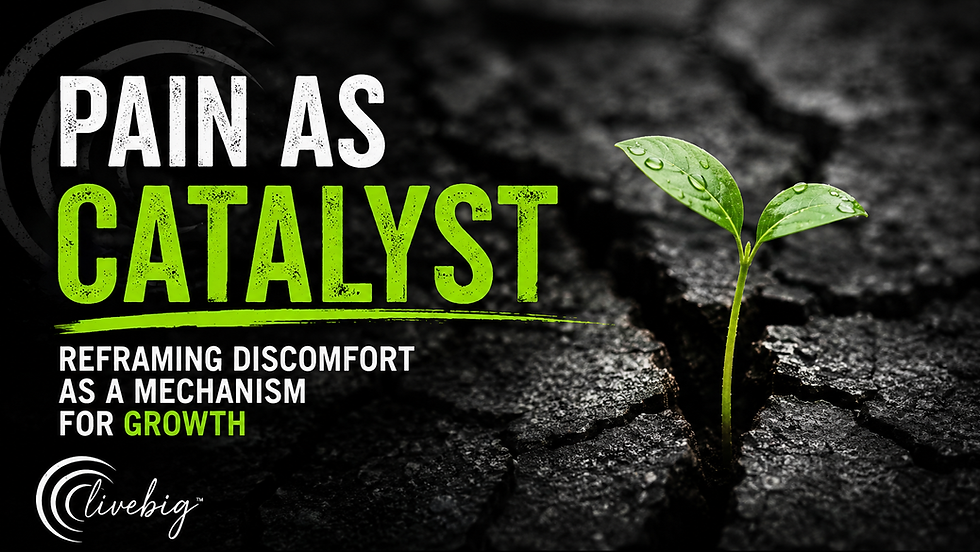
Pain is the First Step to Healing
Just as a wound must be exposed before it can be treated, emotional and psychological challenges must be acknowledged before they can be overcome. Pain is often a necessary step in the process of healing.
Great athletes push their physical limits, experiencing pain before building strength. Entrepreneurs often endure financial losses before learning how to thrive in business. Emotional healing, too, requires confronting pain to move beyond it.
Instead of resisting pain or fearing discomfort, we can embrace it as a transition point toward growth. Healing occurs when we process our fears and pain rather than suppressing them.
The Destructive Nature of the Fear Response
When left unchecked, fear can be destructive. It can lead to stress, anxiety, and avoidance of opportunities that would otherwise help us grow. The biological fear response—fight, flight, or freeze—is useful in immediate physical danger, but in modern life, it often holds us back from meaningful progress.
Chronic fear and stress weaken the immune system, decrease cognitive function, and limit creativity. This is why it is essential to recognize when fear is an overreaction rather than a helpful guide. By practicing mindfulness and conscious decision-making, we can prevent fear from dictating our choices.
Finding Purpose Beyond the Veil
Beyond the veil of fear lies purpose. When we push past the limitations fear imposes, we discover what truly matters to us. Purpose is the driving force that keeps us moving forward, even in the face of uncertainty.
Take, for instance, Thomas Edison, who failed thousands of times before inventing the light bulb. If he had succumbed to fear, he would never have changed the course of history. Instead, he saw each failure as a lesson, keeping his purpose at the forefront.
Finding purpose requires asking ourselves, "What impact do I want to make?" When our purpose is clear, fear loses its grip because the mission becomes greater than the discomfort.
Creativity Overpowers Resistance
Creativity is one of the most powerful antidotes to fear and resistance. The moment we engage in creative thinking—problem-solving, innovation, artistic expression—we shift from a state of anxiety to a state of possibility.
In business, creative solutions lead to breakthroughs. In personal growth, creative thinking allows us to see new perspectives. The act of creating—whether through writing, brainstorming, or developing new strategies—overpowers the resistance that fear builds.
When we embrace creativity, we find ways around obstacles rather than stopping at them. Creativity fuels progress, and progress dissolves fear.
The Responsibility to Relax
Relaxing the body and mind is not a luxury—it is a responsibility. Just as a tight muscle needs stretching, a tense mind needs relaxation to function at its best. When we consciously relax, we regain control over our thoughts and emotions, allowing us to move forward with clarity.
Meditation, breathing exercises, and mindfulness practices help in breaking the cycle of fear-based thinking. By regularly incorporating relaxation into our routine, we create space for courage and insight to emerge.
Taking the Step Forward
Fear will always exist, but so will courage. When we recognize fear as a filter rather than reality, we gain the power to reshape our responses. When we see pain as the first step to healing, we embrace growth. When we trust our purpose, we rise above resistance. And when we take responsibility for our mental and emotional state, we set ourselves up for lasting success.
The step forward is always ours to take. With each intentional action, we move closer to the life we envision, leaving fear behind and stepping into our greatest potential.
Personal Growth Exercise: Reframing Fear
Identify a Fear: Write down one fear that has been holding you back. Be specific.
Challenge the Filter: Ask yourself, "Is this fear based on fact, or is it my perception?"
Reframe the Fear: Turn it into a learning opportunity. For example, "I am afraid of failure" becomes "Every failure is a lesson that brings me closer to success."
Take One Small Action: What is one step you can take today to challenge this fear? It could be making a phone call, starting a project, or practicing a skill.
Reflect on Progress: At the end of the week, journal about how taking action impacted your fear and your mindset.
By consistently applying this exercise, you will find that fear loses its control, and your confidence grows in ways you never imagined.
Fear may be a natural response, but it does not have to define your journey. Through courage, creativity, and conscious relaxation, you have the power to step beyond fear and into your highest potential. The next step is yours to take.


Comments